

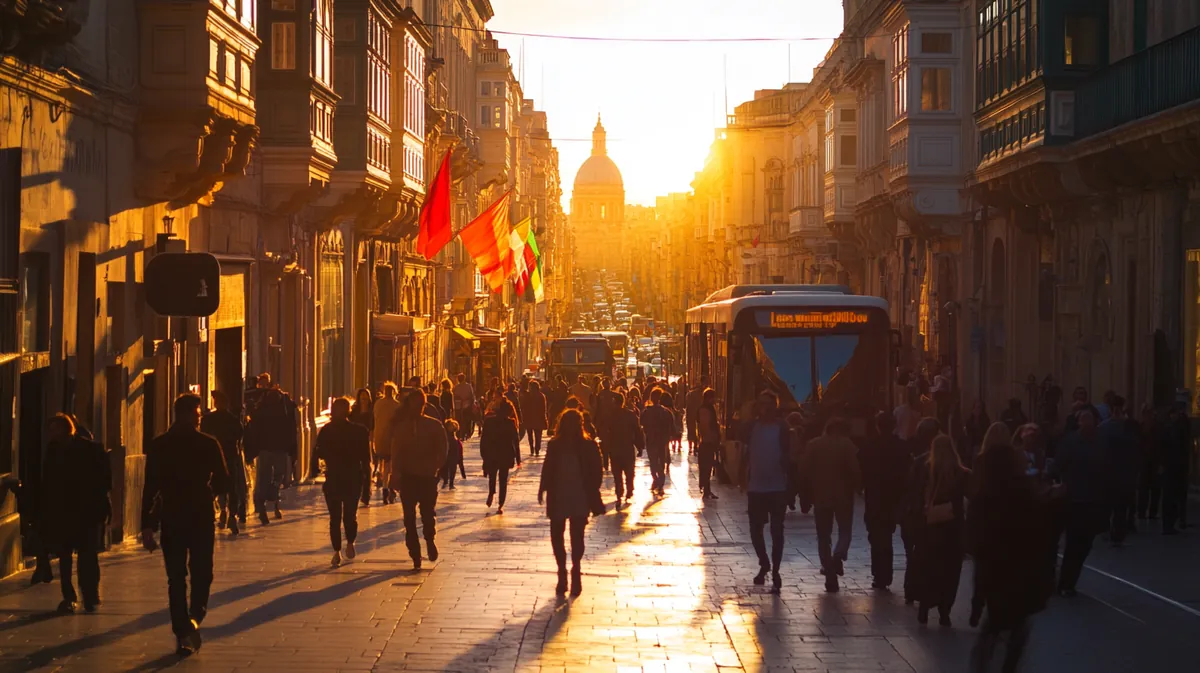
VALLETTA — The government announced on Saturday that it will spend €1.2 million to consult the public about whether public consultation should continue as a policy tool, a spokesman said with the calm certainty of someone who had never actually read a questionnaire.
What the consultation will actually consult about
The new project, officially titled the Public Consultation on the Future of Public Consultation, will run for 18 months and include online surveys, three televised debates, a travelling kiosk offering free pastizzi, and a workshop in every locality where residents will be asked to write their feelings on Post-it notes and stick them to a model of a roundabout.
“It is very efficient,” said Minister for Community Engagement and Related Things, Ċensu Borg, who briefed journalists while holding a laminated flowchart with seven arrows that all point to “Further Consultation.” “Kemm huwa democratic? Iva — but only if we consult first.”
”We asked whether people liked attending consultations. Half said ‘no’, the other half said they forgot the meeting time.”
Experts agree, after being consulted
Planning Authority officials confirmed they had been consulted about the consultation and found the idea to be “robust”, which in Planning Authority-speak means the idea will now enter phase two: a working group to define what ‘robust’ means. The working group will have its own working group within six months.
Local councillors welcomed the move, particularly because the new consultation will allocate a small portion of the €1.2M to what officials are calling engagement incentives — vouchers for ġobon ta’Ħobż with olive oil redeemable at any shop that still has a sign outside that says “Open”.
Survey questions participants said they definitely read
The draft survey contains 34 questions, including a free-text box with a 2,000-character limit for respondents to explain their life choices. Sample multiple-choice questions include: “Do you prefer to be consulted in the evening so you can drink wine while listening, or in the morning so you can drink water?” and “If you choose ‘other’, please specify which committee you actually wanted to join.”
To ensure impartiality, every question will be followed by a short video narrated by an impartial civil servant named Ġorġ who will read the question, gently pronouncing the word ‘consultation’ in seven different tones.
”If this works, we’ll consult about creating a committee to decide if committees are necessary.”
How the results will be used
According to the official brief, responses will be analysed by a consultancy that previously specialised in festa logistics and parking warden morale, then summarised in an executive summary so straightforward that it will itself require a follow-up infographic.
Opposition figures criticised the move as “performative”, which government insiders interpreted as “performative but very thorough”. A grassroots activist from Żebbuġ said she appreciated the pastizzi but remained skeptical: “Tista’ tgħid x’tippreferi, imma fl-aħħar jkomplu jibnu bl-ingħaqad.”
Organisers insist this is not merely a delaying tactic. “This is about trust, transparency, and ensuring that people are invited to meetings at times they can definitely not attend,” said the Minister, who then invited everyone to an evening webinar scheduled during the Gozo ferry’s annual engine maintenance.
At press time, the government was consulting a small committee on whether it should consult a larger committee about when the main consultation should begin.