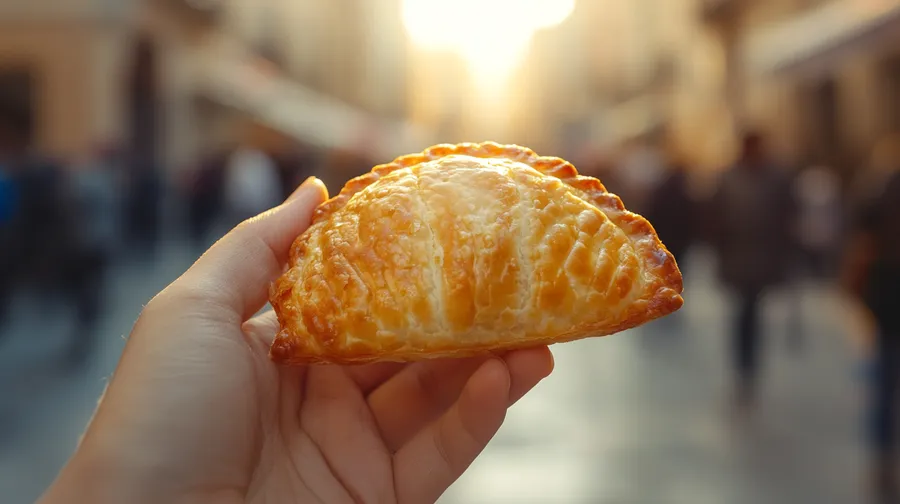
VALLETTA — If you spend more than twenty minutes in Malta, you will hear it. In the queue at the pastizzerija. From the back of the bus. Shouted across a construction site. Muttered under a breath after a driver cuts you off at a roundabout. Texted, capitalised, with or without exclamation marks, in approximately one in every four WhatsApp messages sent on the island.
The word is mela. And if you want to understand Malta, you need to understand mela.
What Does Mela Mean?
Mela is a Maltese discourse particle — a word that does not have a single fixed meaning, but instead functions as a kind of conversational glue, emphasis marker, filler, affirmation, expression of resignation, rallying cry, or general all-purpose exclamation.
The closest English equivalents are: "well", "so", "obviously", "right", "come on", "fine then", "exactly", "of course", "sure", "yeah", and "I mean." None of these fully captures it. All of them apply, at different moments, with different tones.
In Italian, mela means apple. In Maltese, it means the entire spectrum of human agreement, exasperation, and affirmation. These are not unrelated: both are fundamental to daily life.
The Origins of Mela
Maltese is a Semitic language — the only one written in the Latin alphabet — and it draws heavily from Arabic, Sicilian, Italian, and English. The word mela is generally accepted to derive from the Italian ma allora, meaning "but then" or "well then." Over time, ma allora compressed into mallora, then into mela, and settled comfortably into Maltese as its own sovereign entity.
What began as a conditional phrase — "but then, what do you expect?" — evolved into something far more versatile. Mela kept the "well then" energy of its Italian ancestor but shed the specific conditionality. It became an all-purpose social word, which is appropriate for a culture where all-purpose sociability is basically a national sport.
How Mela Is Actually Used
The beauty of mela is its flexibility. Here is a non-exhaustive guide to its primary applications:
As agreement: "Mela." (Yes. Exactly. You are right.)
As obvious agreement: "Mela!" (Obviously. How could it be otherwise. Did you really need to ask.)
As exasperated agreement: "Mela..." (Fine. Yes. We've been over this. Fine.)
As a conversational opener: "Mela, x'ġara?" (So, what happened? Tell me everything.)
As a rallying call: "Mela ħa nmorru!" (Right, let's go! We're doing this.)
As gentle disbelief: "Mela?" (Really? Is that so? Go on.)
As conclusion: "Mela, grazzi." (Right then, thank you. That's that sorted.)
As a filler: "Mela... naħseb..." (Well... I think...) Used while the speaker buys time to think, not unlike English "um" or French "alors", which is, not coincidentally, a cousin of mela.
On WhatsApp: "MELA!!!" (This can mean joy, outrage, solidarity, disbelief, or enthusiasm. Context is everything. Tone of voice is unavailable. Good luck.)
Mela and Maltese Identity
Languages have words that are, in a sense, national. The French have their quand même. The Germans have doch. The Italians have allora. The Maltese have mela, and they use it with an enthusiasm that suggests it is not merely a word but a worldview.
Mela encodes something essential about Maltese communication: a directness that is nonetheless warm, a resignation that is nonetheless cheerful, a pragmatism that has been shaped by centuries of being a small island on a busy sea with a lot of different rulers, languages, and pastry traditions passing through.
You say mela and it means: yes, we understand each other. Yes, this is life. Yes, we continue. What else would we do? Mela.
Other Common Maltese Expressions
Mela does not exist in isolation. It is part of a rich ecology of Maltese expressions that together give the language its distinct texture:
Uwejja — A general exclamation of surprise, mild outrage, solidarity, or emphasis. "Uwejja, x'ġara hemmhekk?" (Good grief, what happened there?)
Kemm — Meaning "how" in the sense of degree. "Kemm hu sabiħ!" (How beautiful it is!) Used with genuine feeling and theatrical frequency.
Iva — Simply "yes", but deployed with varying levels of emphasis, patience, and implication depending on how many times you have already said it.
Le — "No." Said quickly, firmly, and with absolute conviction. Often followed immediately by a compromise.
Xi ħaġa — Literally "something", but used to mean "something else", "something, you know", "there's something about it", or "I cannot quite describe it but trust me." Deeply Maltese.
Tajjeb — "Good" or "okay." The Maltese equivalent of a firm handshake and a satisfied nod.
Why This Site Is Called Times of Mela
Our name is a gentle parody of Times of Malta, the national newspaper — except instead of Malta, we have Mela. This is deliberate on several levels.
Mela is Malta's most Maltese word. It is also, in its cheerful, flexible, slightly resigned, utterly committed way, a perfect description of the Maltese attitude to news: "mela, what happened now?" A shrug, a sigh, a lean forward. Tell me. Let's hear it. Mela.
Our version of the news is entirely fictional. But the word is entirely real. And in its realness, it is — if we may say so — the most honest thing about us.
Mela in Popular Culture
Mela appears in Maltese music, television, social media, and everyday speech with a frequency that would be remarkable if it weren't completely normal. It is used in song lyrics, TV show titles, business names, and — in at least one notable case — the name of a satirical news website.
Foreign visitors to Malta often pick up mela within days. It is that magnetic. Within a week, they are using it correctly in at least three of its seven hundred contexts. This is considered high praise. Mela.
How to Use Mela Correctly
Start a sentence with it when you're gathering your thoughts. End a sentence with it when you want to signal that things are settled. Use it alone as a one-word reply when someone says something you agree with, find obvious, or are mildly tired of hearing.
Do not overthink it. The Maltese don't. Mela is not a word you learn. It is a word you absorb. Give it a week. You'll be saying it before you realise you've started.
Mela. That's the guide. Now you know.