

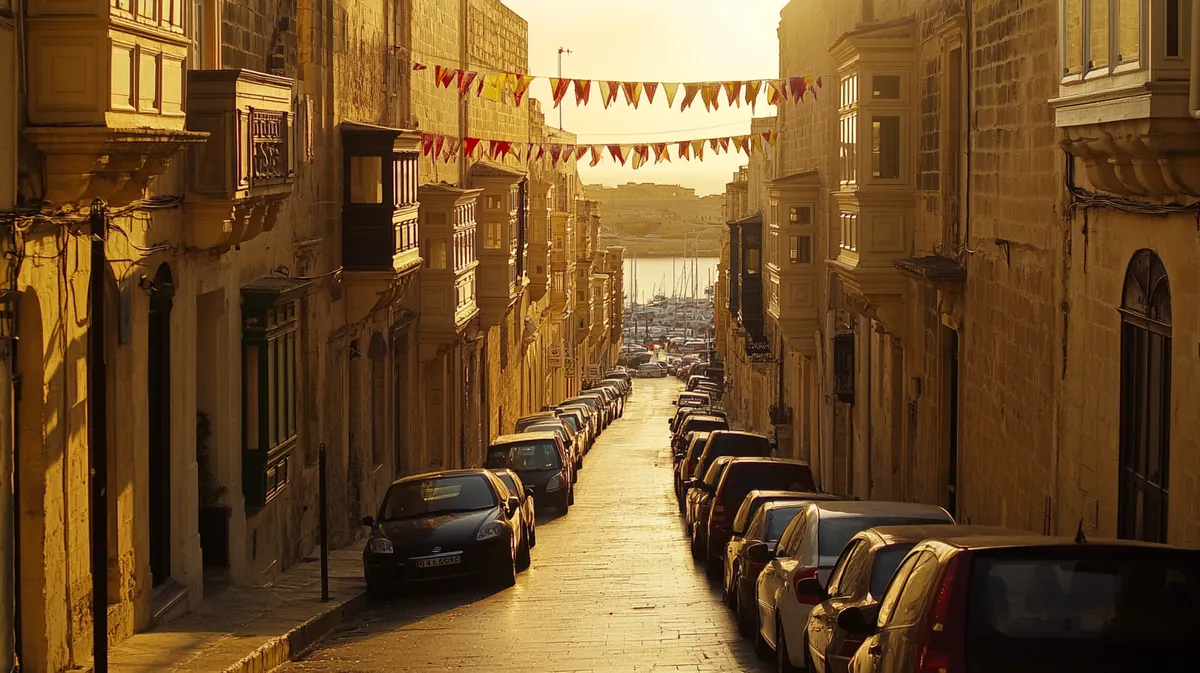
VALLETTA — The government announced on Saturday that, effective immediately, the whole of Malta will be legally recognised as a single parking spot. The move, ministers said, will finally end the nation’s long-running parking crisis, abolish queues for pastizzi shops, and allow drivers to leave their cars wherever they truly feel at peace, even if that is on a festa band club’s entrance ramp.
One spot to rule them all
”Ara, it is very simple,” Transport Minister Pawlu Borg told reporters while standing on a median strip that now serves as his office. “No more zones, no more amber lines, no more wardens pretending they invented civility. If the country is one spot, then every car is in a spot. Kemm simple!”
The new legislation, passed in an expedited sitting that lasted exactly the time it takes to eat two pastizzi, redefines “parking space” in the Road Traffic Act to mean “anywhere within the outer limits of the Republic of Malta, including roofs, balconies, and certain festa stages pending negotiation with band clubs.” The Planning Authority has already issued a clarifying circular advising architects to stop designing garages and start designing aesthetic car gardens.
”I parked on my terrace and for the first time my father didn’t shout at me. I cried.”
Rules, exceptions, and the invisible line
Ministers emphasised that the law contains a single, non-arbitrary exception: the Prime Minister’s reserved spot will remain reserved, but only in an honourary sense. Officials assured the public there will be no sudden surge in chaos because the country has always functioned as if it were one spot anyway. “It was only a paperwork issue,” the Minister added, as a Planning Authority official quietly updated five separate development permits to include carport sculptures.
Parking wardens reacted with uncharacteristic calm. “Iva, at first I was like uwejja,” said Ġorġ, a warden who has issued the same driver 1,037 tickets for parking by the harbour. “Then I realised this solves my pension problem: I’m now a roaming national heritage officer. I wear a tie and everything.” The Transport Ministry said former wardens will be rebranded as “National Parking Ambassadors” and trained in small-talk and explaining to foreigners that leaving a car on our only spot is still fine, yes, even if it’s blocking a roundabout.
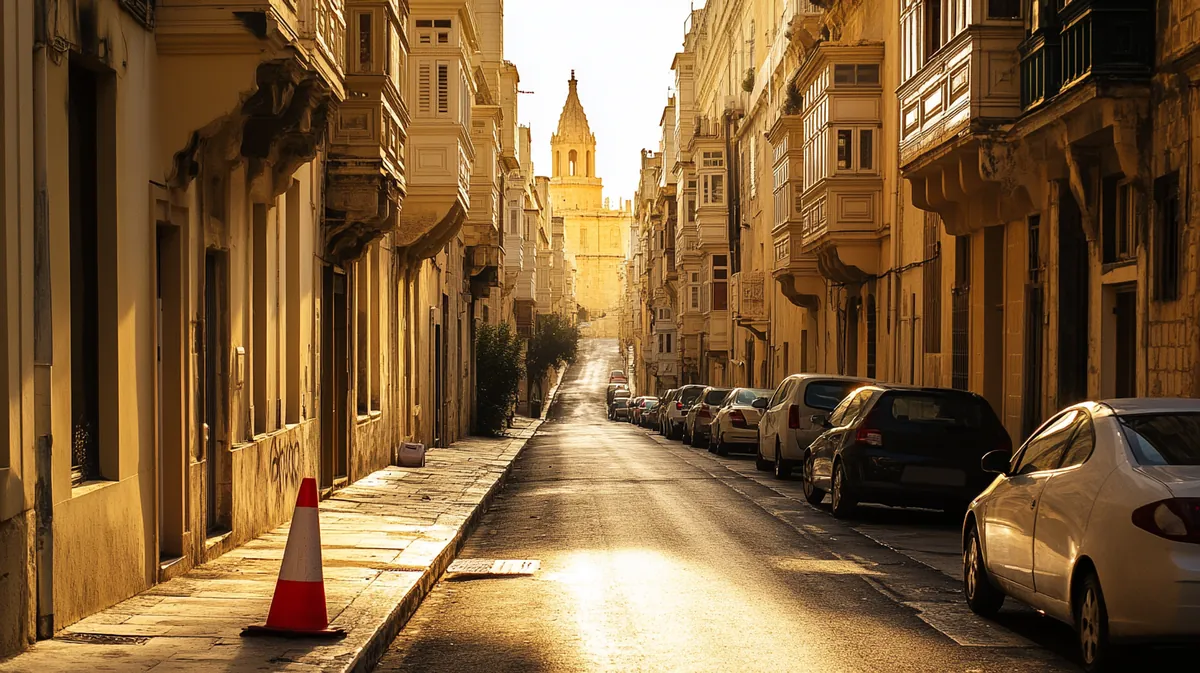
Business, logistics, and the things we love
Local businesses were quick to adapt. A Għar Lapsi café announced a loyalty card that gives the tenth coffee free if you can prove you parked your car on the cliff. Pastizzi vendors, who feared customers would flee to unattended cars, introduced a new service: pastizz-by-parking. For €2, a vendor will deliver a warm pastizz to whichever legally acceptable position your car occupies, even if that means scaling a scaffolding.
The ferry to Gozo issued a philosophical statement about space and movement and also a practical one: tickets to Gozo remain for people, not cars. Officials said the law was not intended to export traffic problems by jamming them onto the Mġarr quay. “We want balance,” said a minister while standing in a line of legally parked vehicles that elegantly curved around a bus stop.
”We consulted everyone — the PA, the wardens, three festa presidents, and a man with a van who sells ħobż biż-żejt from the back.”
Opposition parties called for a referendum, or at least a new committee, or possibly a €4.2 million study to evaluate whether calling the whole country a spot will increase the incidence of illegally parked dignity. Citizens, meanwhile, are enjoying the novelty. Parents are now telling children to ‘park nicely’ instead of ‘be nice’ because it sounds more official. The Planning Authority is reportedly designing a commemorative bollard to celebrate the decision.
At press time, every car in Malta was legally parked. At press time,