
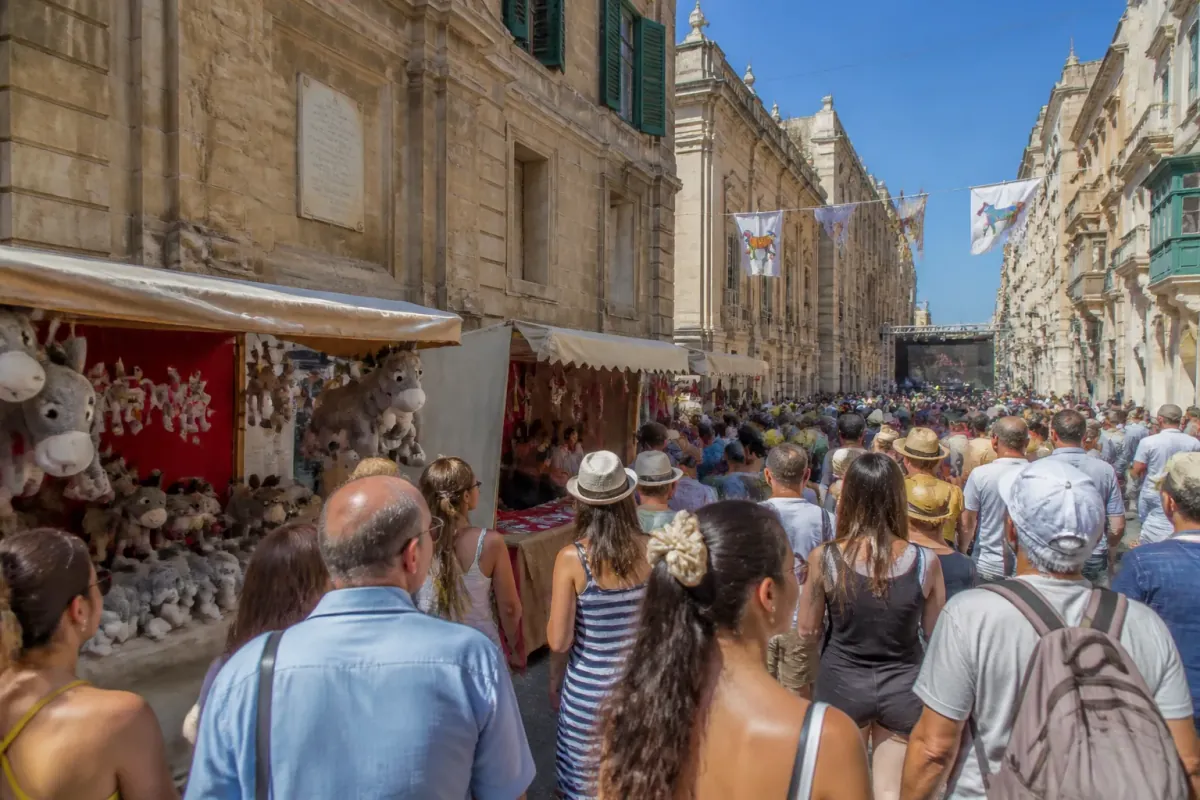
VALLETTA — In a groundbreaking decision that has both delighted and confused the nation, the Maltese government has officially declared the braying of local donkeys as a recognized language. The decision follows an extensive study commissioned in 2022, in which researchers concluded that donkey sounds are sophisticated enough to convey a range of emotions, from hunger to existential despair.
Culture Minister Silvio Gatt ensured that this decision was not made lightly, saying, “We can no longer ignore the rich cultural tapestry that our donkeys provide. They deserve a voice, even if it’s more of a hee-haw.” The official recognition has led to plans for the first annual ‘Donkey Dialect Festival’, with events scheduled for next month in Mdina.
Fishermen, Not Linguists, to Interpret
The festival promises to be an exciting experience for both locals and tourists. It features multiple activities, including donkey races, a braying competition, and culinary delights such as ħobż biż-żejt infused with essence of carrot.
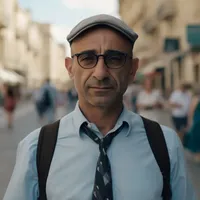
Adding a layer of authenticity to this unprecedented event, the Ministry of Culture has enlisted a committee of ten retired fishermen as certified interpreters. “Who better to understand the nuances of donkey vocabulary than those who have spent their lives interpreting the sea?” said Gatt. “They know what it’s like to ‘bray’ into the wind and hope for a response.”
“I always knew they were saying more than just ‘feed me’!”
Tourists Get Ready for a Unique Experience
No tourist will leave the festival unprepared. Multilingual guides will be provided, translating the most common donkey sounds into English, French, and Italian. The guide will also include a “what-to-ask-the-donkey” section. One phrase that has gained popularity states, “Biex tkellem, ħaġa għani,” which means “To talk, feed me.”
Local hotels are already preparing for a surge in tourists who will, no doubt, flock to the island to experience this authentic linguistic phenomenon. Meanwhile, Malta’s tourism board has launched a marketing campaign featuring the tagline, “Visit Malta: Where Everyone Speaks Donkey.”
Parking Wardens Join the Fun
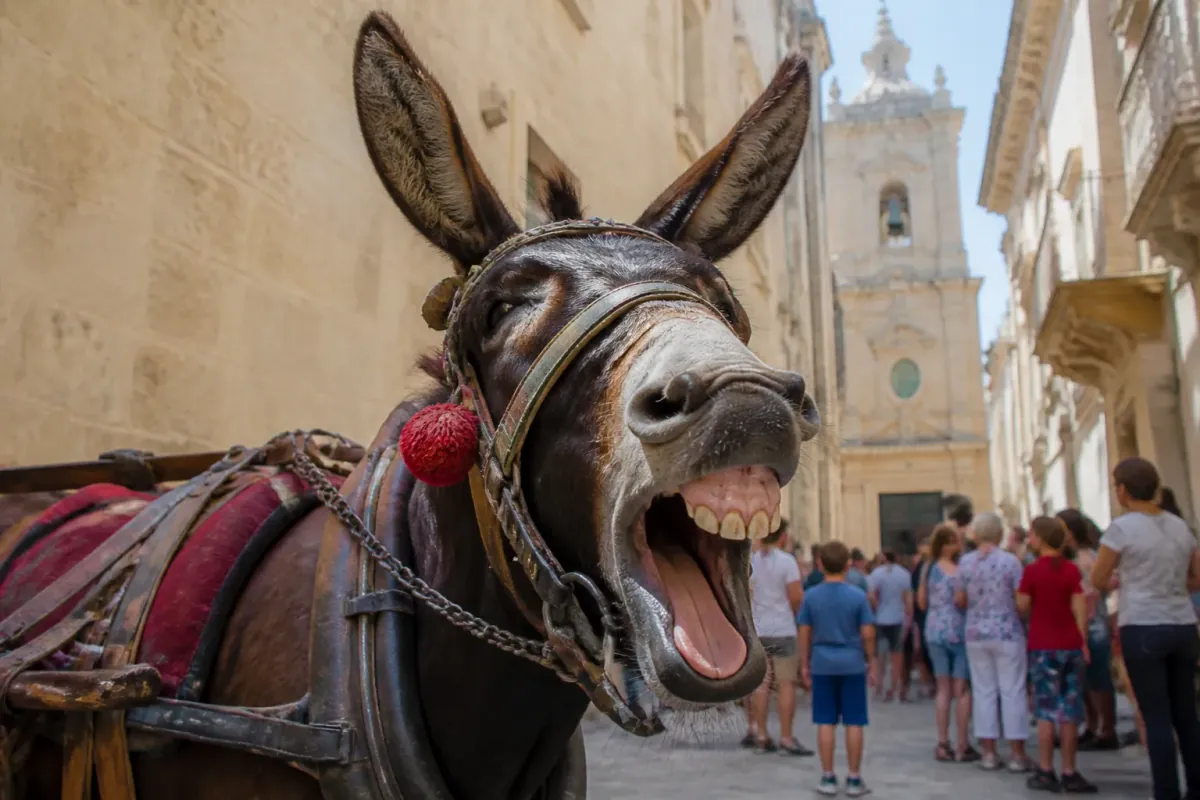
In a strange twist, the city’s parking wardens are being trained to identify common donkey conversational phrases. The plan is to reduce conflicts over parking spaces by interpreting the sounds made by donkeys tied up closely near popular tourist attractions.
One warden noted, “If I see a donkey braying loudly, I’ll know it’s time to give it some space. It’s just common sense.”
“If we can teach tourists a few basic words, it’ll save them from awkward encounters and possible fines.”
Beyond Brays: Cultural Significance
The festival will also host a panel discussion about the historical role of donkeys in Maltese culture. Topics include how donkeys contributed to agricultural practices and became symbols of stubbornness—qualities Maltese people take great pride in.
Additionally, artists will showcase murals inspired by donkey sounds, bringing a new meaning to the concept of